


ELCRA
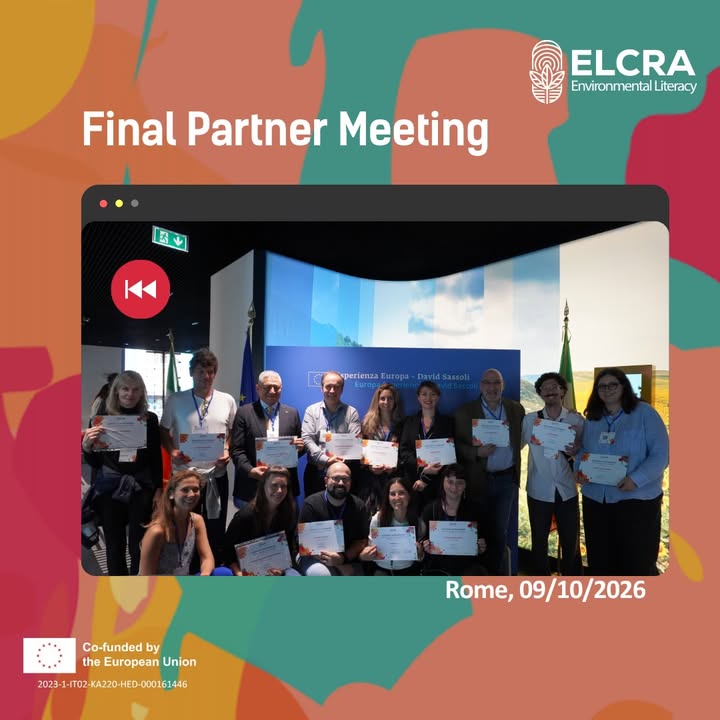
Our ELCRA partner meeting in Rome, 09/10/2026 brought the whole consortium together around one table, with colleagues from Italy, Spain, Poland, Lithuania and Portugal. 💚
We took stock of the research carried out so far, shared updates on each work package, and planned the next steps for the project: from the ECO-Literacy Framework to the COIL course connecting students across Europe. 🎓
What we value most about moments like this is the people: universities, youth organisations and students working side by side to bring environmental literacy into higher education and to prevent violent radicalisation in climate activism. 🌿
Thank you to everyone who took part, and to our partners @Università di Siena, @OpenCom Italy, @Universidad Complutense de Madrid, @Uniwersytet Jagielloński, @Klaipėda University, @Universidade de Coimbra, @ESN Italia and @ESN Portugal. 🙌
📚 Follow the project and read our results: elcraproject.eu (link in bio)
Funded by the European Union. Views and opinions expressed are however those of the author(s) only and do not necessarily reflect those of the European Union or the Erasmus+ Agency - INDIRE. Neither the European Union nor the Erasmus+ Agency can be held responsible for them.
#ELCRA #EnvironmentalLiteracy #ErasmusPlus #PartnerMeeting #HigherEducation #ClimateEducation #EUProjects
ELCRA
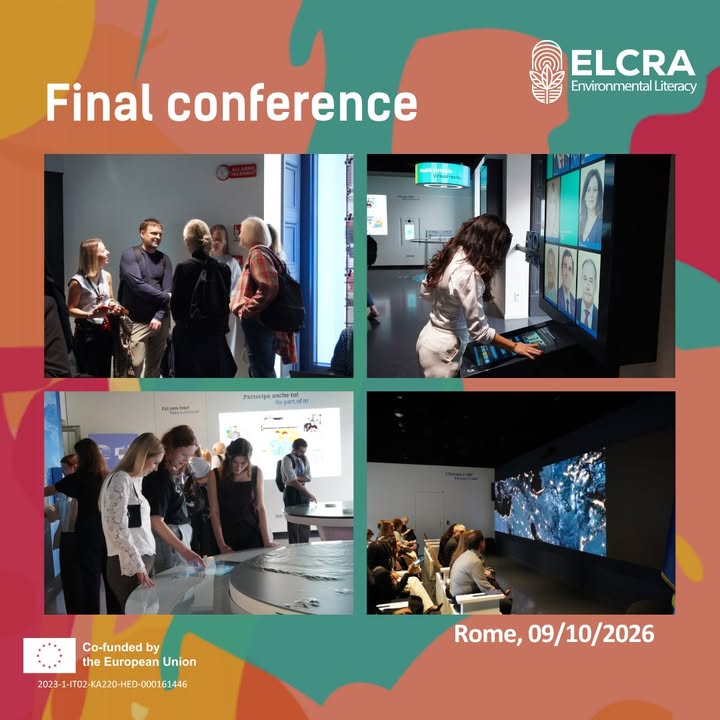
On 9 October, we gathered at Europe Experience – David Sassoli in Rome, and online via livestream, to close the ELCRA journey with a conversation about environmental literacy, young people and Europe’s commitment to the climate. 💚
We presented the ELCRA project alongside other KA2 projects, shared our Policy Paper and the European commitment behind it, listened to the Italian perspective, and gave space to the voices of young people.
A special thank you to
🎤 Alessia Ricci (@INDIRE), Communication Officer and Green Contact Point, for showing how Erasmus+ supports the green transition, from green travel to KA2 projects
🎤 Mattia Lolli (@Legambiente), Volunteer Coordinator, for presenting Legambiente’s work and Italy’s path on environmental sustainability, and for closing with a hopeful message that sparked a great dialogue with participants
🏛️ Europe Experience – David Sassoli, for hosting us in such a meaningful and fitting place
🤝 Our partners and their students @Università di Siena, @OpenCom Italy, @Universidad Complutense de Madrid, @Uniwersytet Jagielloński, @Klaipėda University, @Universidade de Coimbra, @ESN Italia and @ESN Portugal
👥 And everyone who joined us in Rome and online
The project ends, but its results stay available for you.
📚 Explore them at elcraproject.eu (link in bio)
#ELCRA #EnvironmentalLiteracy #ErasmusPlus #FinalConference #ClimateEducation #HigherEducation #Europe #EUProjects
Funded by the European Union. Views and opinions expressed are however those of the author(s) only and do not necessarily reflect those of the European Union or the Erasmus+ Agency - INDIRE. Neither the European Union nor the Erasmus+ Agency can be held responsible for them.
Università di Siena
OpenCom Italy
Universidad Complutense de Madrid
Uniwersytet Jagielloński
Socialinių ir humanitarinių mokslų fakultetas, KU
Instituto Jurídico da Faculdade de Direito da Universidade de Coimbra
Erasmus Student Network Italy - ESN Italia
Erasmus Student Network Portugal - ESN PT
ELCRA
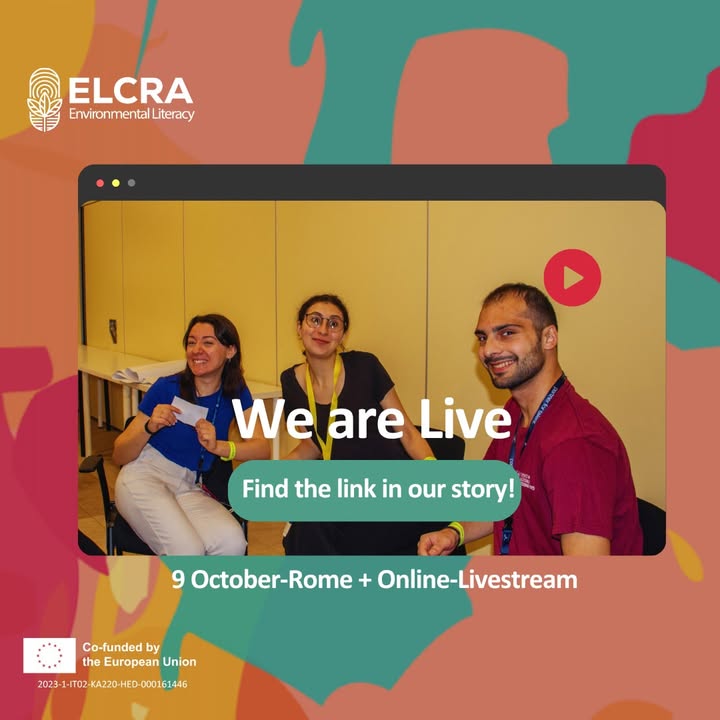
Today is the day! The ELCRA final conference from Rome will go live at 3h30pm CEST. Link in the comments!
#ELCRA #ErasmusPlus #LiveStream #Countdown #ClimateActivism #EnvironmentalLiteracy
Università di Siena
OpenCom Italy
Universidad Complutense de Madrid
Uniwersytet Jagielloński
Socialinių ir humanitarinių mokslų fakultetas, KU
Instituto Jurídico da Faculdade de Direito da Universidade de Coimbra
Erasmus Student Network Italy - ESN Italia
Erasmus Student Network Portugal - ESN PT
ELCRA
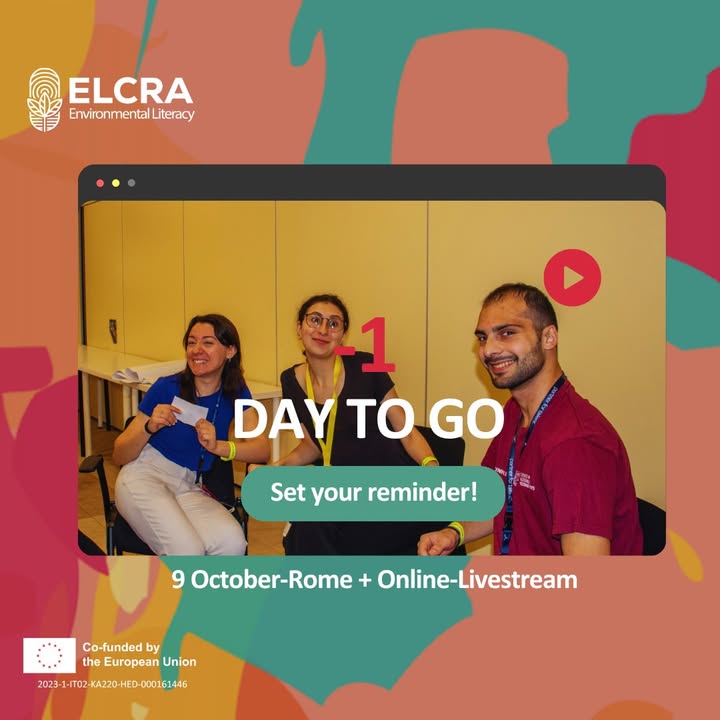
⏳ Last reminder: the ELCRA Final Conference is tomorrow!
📅 Friday, October 9th | 15:30 CEST
🎥 Watch the full event live from Rome, wherever you are in Europe.
🔗 Set a reminder on YouTube: www.youtube.com/live/EMDUqBSQqfQ
📍 Limited in-person seats still available in Rome
#ELCRA #ErasmusPlus #LiveStream #Countdown #ClimateActivism #EnvironmentalLiteracy
Università di Siena
OpenCom Italy
Universidad Complutense de Madrid
Uniwersytet Jagielloński
Socialinių ir humanitarinių mokslų fakultetas, KU
Instituto Jurídico da Faculdade de Direito da Universidade de Coimbra
Erasmus Student Network Italy - ESN Italia
Erasmus Student Network Portugal - ESN PT